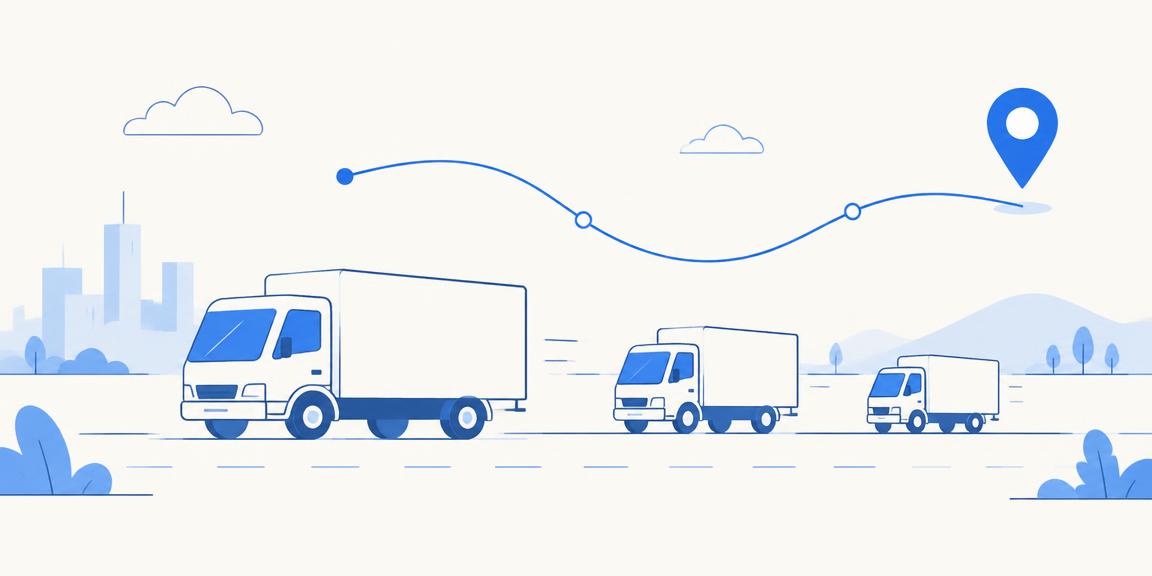
A fleet is a distributed system that happens to have wheels.
Keep every asset moving, compliant, and accounted for in real time.
Where the
sector stands.
Fleet operators manage vehicles, drivers, hours, maintenance, fuel, and compliance simultaneously — usually across a telematics portal, a maintenance package, a fuel card site, and a dispatch board. The cost of a mismatch between them is a truck sitting still.
Regulatory hours-of-service enforcement and driver scarcity make utilization the central metric. Anything that adds unplanned downtime or unpaid administrative time directly reduces capacity.
What technology is changing right now.
The forces reshaping this industry — and why they turn into engineering problems.
Telematics became universal
Location, engine, and behavior data stream continuously from every vehicle, which makes utilization and safety measurable rather than anecdotal.
Compliance went electronic
Electronic logging removed discretion from hours-of-service, so planning has to respect legal clocks automatically.
Maintenance turned predictive
Fault codes and usage patterns support scheduled intervention instead of roadside failure.
Electrification added constraints
EV range, charging windows, and depot power turn routing into an energy problem as well as a distance problem.
Where it breaks today
- ▲Dispatch decisions made without live hours-of-service data
- ▲Maintenance schedules tracked on a whiteboard
- ▲Fuel and toll costs reconciled weeks later
- ▲Driver paperwork submitted on paper and re-keyed
- ▲No accurate cost-per-mile by vehicle or route
Systems that fix it
Dispatch and routing systems
Assignment and routing that respects legal hours, vehicle capability, and customer time windows.
Telematics data platforms
Normalized ingestion across device vendors with alerting, utilization reporting, and driver scorecards.
Maintenance and asset lifecycle
Preventive schedules, fault-driven work orders, parts inventory, and total cost of ownership per unit.
Compliance and settlement
Hours, inspections, fuel tax, and driver settlement produced from operational data rather than paperwork.
How we engineer here
Driver availability is legally bounded. Planning systems must model the clock, not just the schedule.
Jurisdictional fuel tax and toll reconciliation require accurate mileage attribution by state.
Telematics vendors differ substantially. Ingestion normalizes to one internal model.
Driver behavior data is personal data and is governed accordingly.
The language of the sector
Plain-English definitions, so nobody has to pretend they know what an acronym means.
- ELD
- Electronic Logging Device — records driving time for hours-of-service compliance.
- HOS
- Hours of Service — the legal limits on driving and on-duty time.
- IFTA
- International Fuel Tax Agreement — the fuel tax reporting scheme across jurisdictions.
- Deadhead
- Miles driven without revenue-generating load.
- TCO
- Total Cost of Ownership — full lifecycle cost of an asset including fuel, maintenance, and depreciation.
Straight answers.
Can you work with our existing telematics provider?
Yes. We normalize across vendors so switching providers does not break your reporting.
Do you build routing from scratch?
We build routing that encodes your real constraints, and use proven engines underneath where it makes sense.
Can you produce IFTA filings?
Yes, from the same mileage data that drives operations.
Running one of these
operations?
Describe your setup to our AI Strategist and get an architecture sketch back in seconds — or go straight to a human.