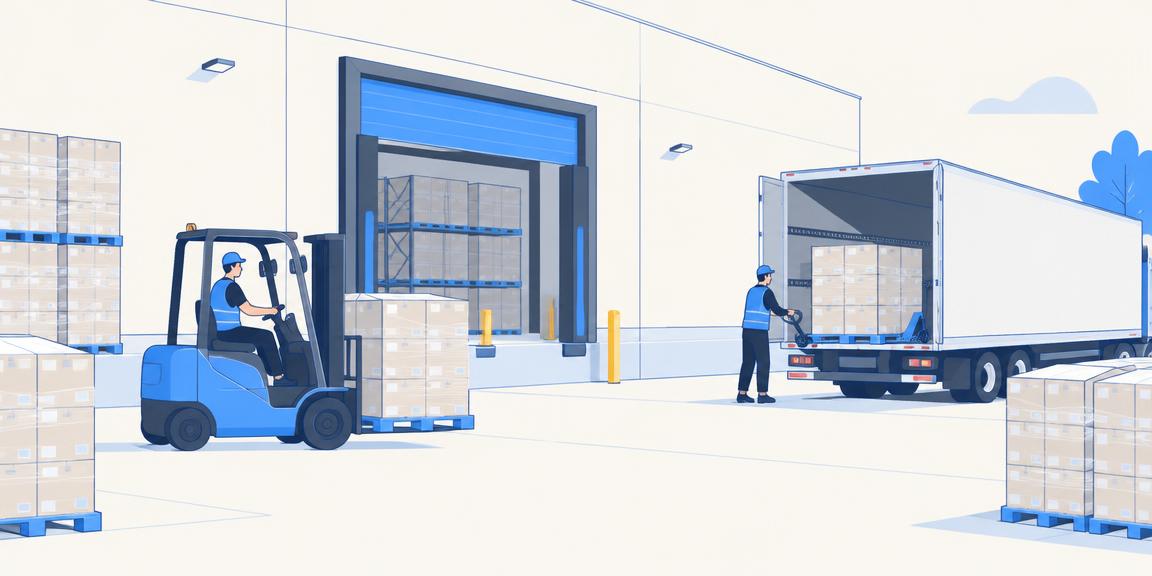
Distribution is a margin business being decided by software.
Turn phone-and-email distribution into a self-serve operation that scales without headcount.
Where the
sector stands.
Wholesale runs on relationships, but it increasingly transacts through software. Buyers who spend their personal lives in modern commerce experiences do not want to fax a purchase order or wait for a rep to email back a price. Distributors that made ordering self-serve capture volume from ones that did not.
The complexity is real and specific: customer-tier pricing, contract rates, minimum order quantities, case-pack rules, backorders, and credit terms. Generic e-commerce platforms handle none of it well, which is why the strongest distributors end up with custom systems built around their actual commercial rules.
What technology is changing right now.
The forces reshaping this industry — and why they turn into engineering problems.
B2B buyers adopted B2C expectations
Search, live availability, saved orders, reorder history, and instant pricing are now baseline expectations from professional buyers, not differentiators.
Channel proliferation multiplied complexity
Selling through reps, a portal, marketplaces, EDI partners, and direct simultaneously means every channel needs the same pricing and inventory truth.
Pricing moved from static sheets to systems
Cost volatility made annual price lists unworkable. Rules-driven, per-customer, per-contract pricing engines are becoming the norm.
Product data became a competitive asset
Clean, enriched, searchable catalog data is what makes self-serve ordering possible at all. Most distributors are sitting on decades of messy SKU data.
Where it breaks today
- ▲Orders arriving by phone, email, and fax and being re-keyed by hand
- ▲Customer-specific pricing living in a rep's spreadsheet
- ▲No live availability, so promises are made and then broken
- ▲Catalog data inconsistent enough that search does not work
- ▲Reorders that require a phone call every single time
Systems that fix it
B2B ordering portals
Self-serve platforms with account-level pricing, credit terms, order history, quick reorder, and approval workflows for buying teams.
Pricing and contract engines
Rules-driven pricing supporting tiers, contracts, volume breaks, promotions, and effective dates — applied consistently across every channel.
PIM and catalog infrastructure
Product information management: normalization, enrichment, attributes, media, and the search experience that makes a large catalog usable.
Channel and ERP integration
Keeping orders, inventory, and customers synchronized across your ERP, portal, marketplaces, and EDI trading partners.
How we engineer here
Pricing and terms are the business. Rules are implemented exactly as your commercial team defines them, including the exceptions.
Self-serve should absorb routine reorders so reps can spend time on growth accounts — the design reflects that.
Search, filtering, and browsing are engineered to stay fast at hundreds of thousands of SKUs.
In most distribution businesses the ERP stays authoritative. We integrate around it rather than fighting it.
The language of the sector
Plain-English definitions, so nobody has to pretend they know what an acronym means.
- PIM
- Product Information Management — the system that stores and standardizes product attributes, descriptions, and media across channels.
- MOQ
- Minimum Order Quantity — the smallest amount of a product a buyer is allowed to purchase in one order.
- Case pack
- The fixed quantity a product ships in, which constrains how orders can be placed and picked.
- Punchout
- An integration that lets a buyer shop your catalog from inside their own procurement system and return a completed cart to it.
Straight answers.
Will a portal cannibalize our sales reps?
In practice it moves routine reorders off the phone and frees reps for higher-value work. We design the portal to support reps, including ordering on a customer's behalf.
Our pricing rules are unusually complicated. Is that a problem?
No — it is the reason custom software exists here. Complex, exception-heavy pricing is exactly what off-the-shelf platforms handle badly.
Can this connect to our existing ERP?
Yes. ERP integration is a standard part of these builds.
Running one of these
operations?
Describe your setup to our AI Strategist and get an architecture sketch back in seconds — or go straight to a human.