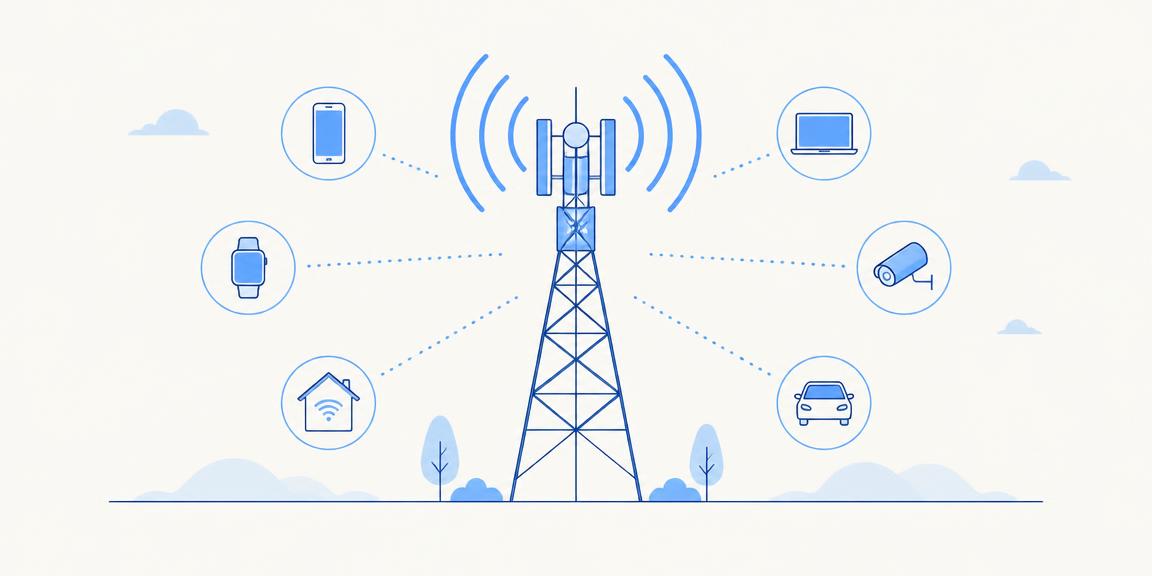
The network is precise. The systems describing it usually are not.
Turn network reality into accurate service, billing, and support data.
Where the
sector stands.
Operators and service providers run OSS and BSS stacks that were assembled over decades of mergers and product launches. Network inventory drifts from physical reality, provisioning requires manual steps, and billing disputes trace back to a record nobody trusts.
Margins depend on automating the order-to-activation path and on knowing what is actually deployed. Both are data quality problems before they are network problems.
What technology is changing right now.
The forces reshaping this industry — and why they turn into engineering problems.
Networks became software-defined
Virtualized functions and programmable networks mean provisioning can be automated end to end — if the inventory is accurate.
Fiber build accelerated
Large-scale deployment requires construction, permitting, and inventory data to stay in step with the crews in the ground.
Service assurance got proactive
Telemetry and synthetic testing catch degradation before the customer calls, changing the support economics.
Billing models multiplied
Usage, tiered, and bundled pricing across segments put pressure on rating and mediation systems.
Where it breaks today
- ▲Network inventory that does not match what is physically installed
- ▲Provisioning requiring manual steps across several systems
- ▲Truck rolls dispatched for issues diagnosable remotely
- ▲Billing disputes with no authoritative usage record
- ▲Order status invisible to the customer and to support
Systems that fix it
Inventory and reconciliation
Authoritative network and service inventory with automated reconciliation against discovered network state.
Order-to-activate automation
Orchestrated provisioning across systems with rollback, retries, and status visible to sales and support.
Mediation and rating
Usage collection, mediation, and rating pipelines that survive volume and produce defensible invoices.
Assurance and support tooling
Telemetry-driven alerting, diagnostic tooling for support, and outage communication workflows.
How we engineer here
Usage and event volumes are extreme. Pipeline and storage design come before feature work.
Coverage, outage, and service-quality reporting obligations vary by jurisdiction.
Older network elements speak older interfaces; adapters are a permanent part of the architecture.
Provisioning and assurance systems are operationally critical and designed for redundancy.
The language of the sector
Plain-English definitions, so nobody has to pretend they know what an acronym means.
- OSS / BSS
- Operational and Business Support Systems — the network-facing and customer-facing halves of a carrier stack.
- Mediation
- Collecting and normalizing raw usage records before rating and billing.
- Truck roll
- Dispatching a technician on site — the most expensive way to resolve an issue.
- Order-to-activate
- The full path from customer order to working service.
- Network inventory
- The record of what equipment and circuits exist and how they are connected.
Straight answers.
Can you integrate with our existing OSS?
Yes — orchestration and reconciliation layers on top of incumbent systems are the usual entry point.
Can you handle our usage volume?
High-throughput pipeline design is a core competency here.
Do you do field and construction tracking?
Yes, including offline-capable tooling for build crews.
Running one of these
operations?
Describe your setup to our AI Strategist and get an architecture sketch back in seconds — or go straight to a human.