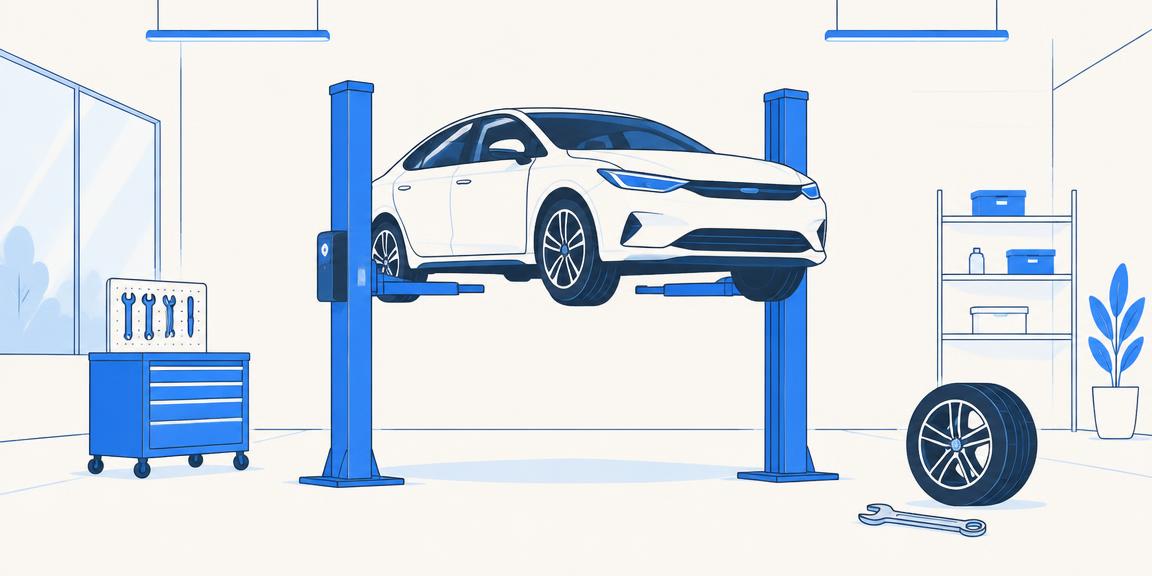
The vehicle got connected. The dealership's software mostly did not.
Connect sales, parts, and service into one operational and customer picture.
Where the
sector stands.
Dealer groups and aftermarket operators run a DMS at the center with parts catalogs, service scheduling, CRM, and manufacturer systems around it. Customer history fragments across departments, and the service bay — the highest-margin part of the business — is often the least instrumented.
Meanwhile vehicles emit telemetry, parts availability is a live commercial problem, and customers expect to book, approve, and pay for service from a phone. All of that is integration work.
What technology is changing right now.
The forces reshaping this industry — and why they turn into engineering problems.
Service went digital
Online booking, digital inspections with photo evidence, and mobile approval changed both throughput and approval rates.
Parts became a data race
Fitment accuracy and live availability determine whether a job completes today or next week.
Vehicles report their own condition
Connected diagnostics enable proactive service outreach based on actual vehicle state.
Buying moved online
Customers configure, finance, and often complete purchases digitally, which requires inventory and pricing to be accurate in public.
Where it breaks today
- ▲Customer history split between sales, parts, and service
- ▲Technician time and job status tracked on paper tickets
- ▲Parts fitment errors causing repeat orders and delays
- ▲Estimates approved by phone tag instead of a link
- ▲No accurate view of effective labor rate by tech or job type
Systems that fix it
Service workflow systems
Scheduling, digital inspection, estimate approval, parts staging, and technician time capture in one flow.
Parts and inventory tooling
Fitment-aware catalogs, live availability across locations and suppliers, and reorder logic tied to actual demand.
Unified customer records
One customer and vehicle history across departments and locations, usable by anyone who picks up the phone.
Connected vehicle integrations
Telemetry ingestion for proactive service, warranty analysis, and fleet customer reporting.
How we engineer here
Dealer management systems restrict access and charge for it. Integration strategy accounts for that upfront.
OEM programs impose specific data, branding, and reporting obligations.
Warranty claims must be documented well enough to survive an audit years later.
Vehicle and location data is personal data and is treated as such.
The language of the sector
Plain-English definitions, so nobody has to pretend they know what an acronym means.
- DMS
- Dealer Management System — the operational and accounting core of a dealership.
- RO
- Repair Order — the record of a service job, its parts, labor, and approvals.
- Fitment
- Whether a given part is correct for a specific vehicle configuration.
- Effective labor rate
- Actual labor revenue per hour sold, after discounts and warranty rates.
- Multi-point inspection
- A standardized vehicle check performed at service intake, increasingly with photo evidence.
Straight answers.
Can you integrate with our DMS?
Usually yes, through the vendor's certified interface; we scope the constraints before committing.
Do you build customer-facing service booking?
Yes, tied to real bay capacity rather than a generic calendar.
Can you handle multi-rooftop groups?
Yes — multi-location data consolidation is a common starting point.
Running one of these
operations?
Describe your setup to our AI Strategist and get an architecture sketch back in seconds — or go straight to a human.